In today’s fast-paced digital economy, technology firms are at the heart of innovation. Many of these companies in India thrive under the Software Technology Parks of India (STPI) scheme — a government initiative designed to support tech-driven exports and foster global competitiveness. However, while STPI collaborations offer immense growth opportunities, they also bring a critical challenge: protecting intellectual property (IP).
Intellectual property is the backbone of any technology business. It includes software code, algorithms, designs, databases, inventions, and creative works. When firms collaborate within the STPI framework — often partnering with other tech companies, research institutions, or foreign clients — IP vulnerabilities can arise. That’s why having a clear legal strategy is essential.
At Ask Advocates Law Chamber, we understand how fragile intellectual property can be in the tech ecosystem. This article explains how tech firms can protect their IP in STPI collaborations through smart contracts, compliance frameworks, and proactive legal measures.
Protecting Intellectual Property in STPI Collaborations: Legal Strategies for Tech Firms - Ask Advocates Law Chamber
Understanding STPI Collaborations
The Software Technology Parks of India (STPI) is a government body under the Ministry of Electronics and Information Technology. It promotes software exports by offering infrastructure, tax incentives, and incubation support.
Tech firms participating in STPI often collaborate with domestic and international partners for:
- Software development and testing
- Cloud computing and AI research
- Data processing and analytics
- Offshore project outsourcing
- Research and innovation partnerships
Such collaborations help startups and established IT firms gain access to talent, technology, and markets. However, they also increase the risk of intellectual property theft, misuse, or unauthorized replication.
Protecting Intellectual Property in STPI - Why Intellectual Property Protection Matters
In STPI projects, multiple entities share knowledge, code, and data. Without proper IP protection, your innovations could be copied or exploited by others. Losing control over your IP doesn’t just mean financial loss — it can damage your firm’s reputation and competitive edge.
For instance:
- A software developer might lose ownership of source code shared with a collaborator.
- A startup could see its patented solution integrated into another company’s product.
- A data analytics firm may face data breaches or misuse of proprietary algorithms.
In short, your IP is your most valuable business asset. Safeguarding it should be your top priority from day one.
Protecting Intellectual Property in STPI - Key Legal Risks in STPI Collaborations
When working under STPI frameworks, several legal issues can emerge:
- Unclear Ownership of Joint IP:
Without defining who owns the outcome of a joint project, disputes may arise over the final product or invention. - Inadequate Confidentiality Agreements:
Collaborators may disclose sensitive code or trade secrets if NDAs are poorly drafted or unenforced. - Weak Contract Clauses:
Vague terms in project agreements can lead to ownership confusion or unintentional IP transfers. - Infringement of Third-Party IP:
Teams may unknowingly use copyrighted or patented materials from outside sources, exposing firms to legal action. - Data Security and Compliance Issues:
STPI units dealing with sensitive information must adhere to Indian data protection laws and international norms like GDPR.
Identifying these risks early allows firms to design better contracts and compliance systems.
Protecting Intellectual Property in STPI - Legal Strategies for IP Protection
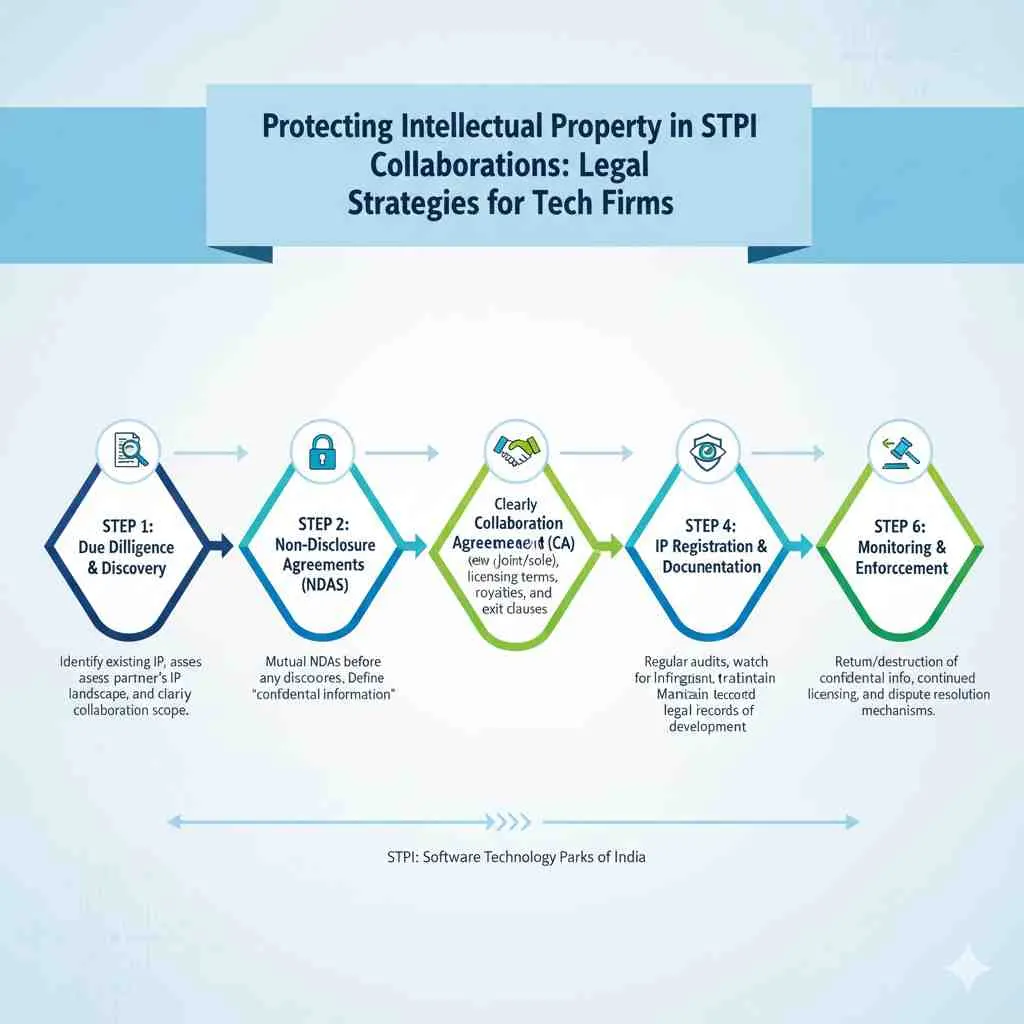
Protecting intellectual property in STPI collaborations requires a multi-layered legal strategy. The following steps can help ensure your IP remains secure and enforceable:
1. Sign Comprehensive Collaboration Agreements
A well-drafted agreement forms the foundation of IP protection. It should:
- Define ownership of pre-existing IP and newly developed IP.
- Specify who retains rights over improvements or derivatives.
- Include clauses for IP licensing, royalty, and revenue sharing.
- Clearly state IP handling after project completion or termination.
These clauses prevent misunderstandings and give you a strong legal base if disputes arise.
2. Use Non-Disclosure Agreements (NDAs)
Before sharing any technical details or proprietary data, always sign an NDA. It should:
- Bind both parties to maintain confidentiality.
- Specify the duration of secrecy obligations.
- Outline penalties for disclosure or misuse.
An NDA acts as a deterrent and provides evidence of intent to protect IP if a legal issue arises later.
3. Register Your IP Early
IP registration offers formal legal protection. Tech firms should:
- File copyrights for software, source code, and digital content.
- Register patents for inventions or technical processes.
- Protect trademarks for logos, product names, and branding.
- Maintain documentation showing IP ownership timelines.
Registered IP gives you exclusive rights and strengthens your case during infringement disputes.
4. Establish Clear Internal IP Policies
Within your organization, make sure employees and partners know how to handle intellectual property. Create policies for:
- Secure data access and password management.
- Proper marking of confidential materials.
- Restrictions on open-source software use.
- Mandatory assignment of IP created by employees to the company.
Having these policies in place shows due diligence and supports your legal claims.
5. Use Technology to Protect Technology
Legal measures are vital, but technological safeguards can further secure your IP. These include:
- Encryption of software code and data files.
- Access control and multi-factor authentication.
- Digital watermarking and version tracking.
- Monitoring systems for unauthorized sharing or code leaks.
Such tools make it harder for competitors to copy or steal your work.
6. Include Dispute Resolution Mechanisms
Every collaboration agreement should contain a dispute resolution clause. It must mention:
- Preferred mode of resolution (mediation, arbitration, or court).
- Jurisdiction and governing law (Indian or international).
- Procedures for termination or compensation.
Having a clear pathway for resolving disputes saves time and resources if conflicts arise.
7. Ensure STPI Compliance and Recordkeeping
STPI units must adhere to regulatory norms regarding software exports, data transfer, and IP usage. Regular audits, documentation, and compliance reports ensure your firm stays within the law. It also helps when applying for IP-related benefits or government incentives.
Keep proper records of project communications, version history, and contractual correspondence — they can serve as valuable evidence in case of legal proceedings.
Role of Legal Advisors in IP Protection
Partnering with an experienced legal team, such as Ask Advocates Law Chamber, ensures your firm receives the best protection possible. Legal professionals can:
- Draft and review collaboration and licensing agreements.
- Register your IP with the relevant authorities.
- Monitor potential infringements.
- Represent you in arbitration or court.
- Guide you on STPI, IT, and data protection compliance.
Our firm acts not just as a legal guardian but as a strategic partner helping you grow confidently in India’s digital marketplace.
Case Example: A Startup’s IP Saved Through Legal Foresight
A Chennai-based AI startup partnered with a foreign software company under an STPI collaboration. During the project, the startup shared proprietary algorithms and training data. Later, the foreign firm integrated those algorithms into a global product without consent.
Because the startup had pre-registered its copyrights and included strong IP ownership clauses in its agreement, Ask Advocates Law Chamber successfully helped it claim damages and recover rights over the software.
This case highlights how early legal protection prevents future losses.
Global Implications for Indian Tech Firms
STPI collaborations often involve international entities. This brings additional challenges related to jurisdiction, cross-border IP enforcement, and data privacy.
Indian firms should ensure:
- Contracts align with both Indian and international IP laws.
- IP registrations are extended or recognized in target countries.
- Data transfers comply with local and global privacy regulations.
By maintaining compliance across borders, firms can operate globally without risking legal complications.
Building a Culture of IP Awareness
Beyond laws and contracts, companies must cultivate an IP-conscious culture. Encourage teams to treat intellectual property as a shared asset. Conduct regular training sessions on:
- Recognizing IP rights
- Avoiding plagiarism or unauthorized reuse
- Securely handling project materials
- Reporting potential IP violations
An aware workforce is the first line of defense against IP misuse.
The Future of IP Protection in STPI Ecosystems
As technologies like AI, blockchain, and IoT expand, IP protection will become more complex. Legal frameworks will evolve to address emerging issues such as:
- Ownership of AI-generated works
- Blockchain-based IP verification
- Digital asset licensing and smart contracts
Tech firms that adapt their IP strategies to these developments will stay ahead of the curve.
Frequently Asked Questions
Intellectual property (IP) protection ensures that innovations, software, and creative works remain secure in partnerships under the Software Technology Parks of India (STPI) scheme. Since multiple entities share resources and information, clear IP rights prevent misuse, duplication, and disputes. It safeguards a firm’s competitive advantage and maintains ownership integrity over developed technology.
Tech firms should begin by signing detailed collaboration agreements defining IP ownership, usage rights, and revenue sharing. They must also use non-disclosure agreements (NDAs) before sharing any proprietary information. Additionally, registering patents, trademarks, and copyrights early provides formal legal protection, while clear internal IP policies ensure employee compliance.
The most common risks include unclear ownership of jointly developed IP, weak confidentiality clauses, unauthorized use of shared code or data, and potential infringement of third-party IP. Firms also face risks of data leaks and non-compliance with IT or export regulations. Early legal intervention and strong contracts can minimize these challenges.
Yes, but firms must ensure compliance with both Indian and international IP laws. Contracts should specify cross-border usage rights, jurisdiction, and data transfer rules. Registering IP in foreign markets and adhering to global data protection laws like GDPR ensures international enforceability and prevents foreign misuse.
Expert law firms such as Ask Advocates Law Chamber assist by drafting airtight contracts, registering IP, conducting audits, and ensuring STPI and IT Act compliance. They also represent clients in disputes, arbitration, or infringement cases, ensuring tech firms retain complete legal control over their innovations.
Conclusion
STPI collaborations open doors to innovation, investment, and global recognition for Indian tech firms. Yet, these partnerships also expose companies to new intellectual property risks. The solution lies in combining legal preparedness, contractual clarity, and technological safeguards.
At Ask Advocates Law Chamber: The Best Global Force in Legal Defense, we empower tech innovators to protect what they create. Our legal strategies ensure your IP remains safe, your collaborations remain fair, and your business continues to grow without fear.
Read More
- Compare dispute resolution mechanisms for vendor agreements, export commitments, and IP licensing
- Contractual Disputes in STPI Units: Arbitration vs. Litigation for Tech Partnerships
- Challenging or Defending GST Advance Ruling Orders: Legal Strategies and Remedies
- How the Special Valuation Branch (SVB) Impacts Transfer Pricing and Import Valuation – Legal Helpline
- Analyze recurring tax conflicts, GST refund delays, and litigation pathways for disputed exemptions
- Software Technology Parks of India (STPI) – About & scheme info