In today’s fast-moving world, businesses depend heavily on innovation, data, and strong partnerships. Whether you run a startup, a creative studio, a tech company, or a global enterprise, the way you manage intellectual property (IP), protect data, and form collaboration agreements directly influences your success. Yet, many organizations face disputes simply because small details were ignored or unclear. Therefore, it becomes essential to address IP ownership conflicts early, safeguard data privacy, and draft agreements that prevent disputes before they happen.
At Ask Advocates Law Chamber, we work closely with clients to protect their creative work, confidential information, and business relationships. We help them avoid risks and build agreements that strengthen trust instead of creating conflict.
Address IP Ownership Conflicts, Data Privacy Risks, and Drafting Dispute-Proof Collaboration Agreements - Ask Advocates Law Chamber
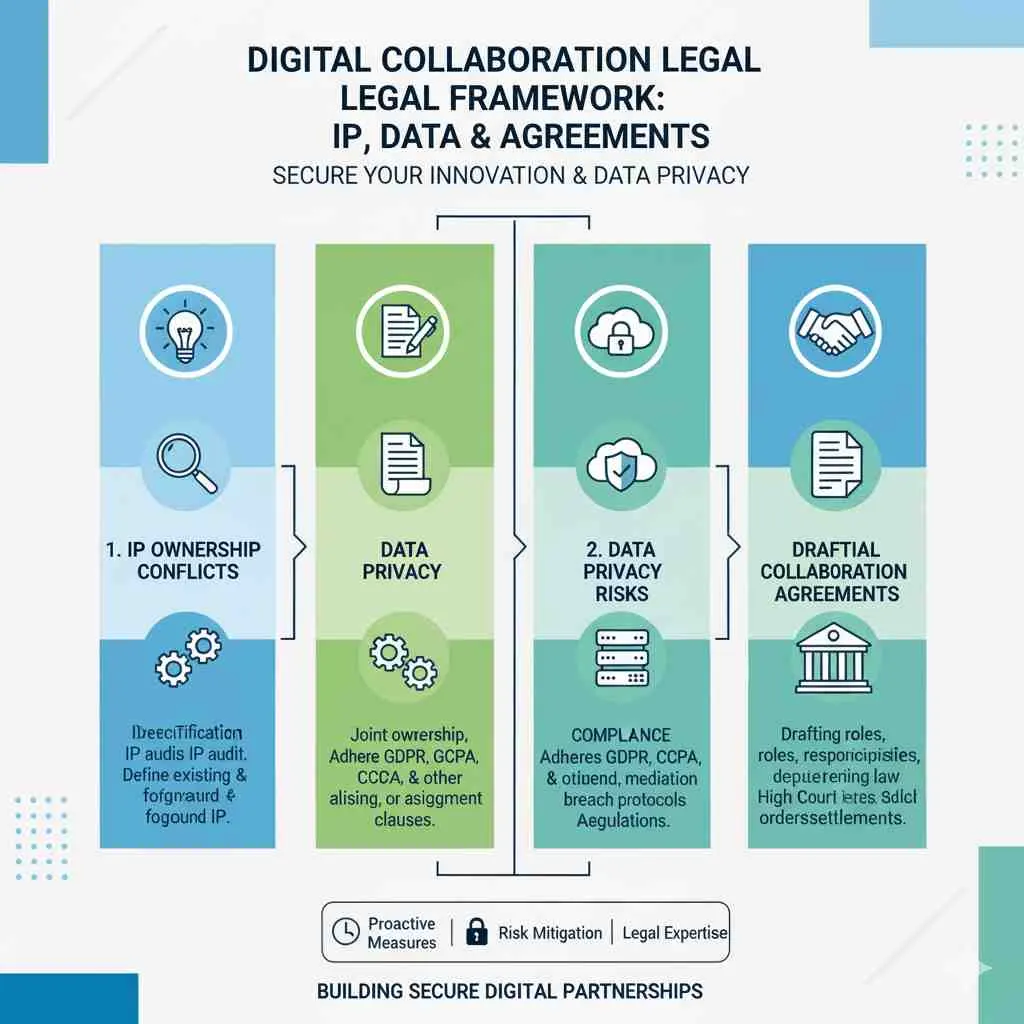
Understanding Why IP Ownership Conflicts Occur
Intellectual property is one of the most valuable assets of any business. It includes inventions, software, designs, logos, artworks, content, research, and even unique methods or processes. However, because multiple people may contribute to a project, ownership can become confusing.
Conflicts arise when:
- Roles and contributions are not clearly defined
- Work is done without written contracts
- Partners assume shared ownership without discussing it
- Employees or consultants claim rights after leaving
- Startups use freelancers without written assignments
Even one unclear line in a contract can lead to years of dispute.
Moreover, with increasing collaborations—such as joint ventures, outsourcing projects, and co-development models—ownership overlaps have become common. This is why businesses must clarify rights before the work begins.
Why Clear IP Ownership Saves Time, Money, and Relationships
When IP ownership is clear, everyone knows:
- Who owns the final product
- What rights each party has
- Who can license or sell it
- How revenue will be shared
- What happens if the partnership ends
This clarity reduces misunderstandings and prevents conflicts that could damage long-term relationships. It also increases investor confidence, strengthens brand value, and ensures legal protection.
How We Help Clients Resolve IP Ownership Conflicts
At Ask Advocates Law Chamber, we use a structured approach:
1. Reviewing All Agreements and Contributions
We begin by examining the entire history—emails, drafts, contracts, payments, and responsibilities. This helps us understand who contributed what.
2. Identifying Legal Rights Under IP Law
We determine whether the work qualifies for copyright, trademark, patent, or trade secret protection and who legally owns it.
3. Negotiating Settlements and Resolutions
Whenever possible, we help parties reach an amicable agreement. Settlement saves time and preserves relationships.
4. Taking Legal Action When Needed
If necessary, we pursue litigation or arbitration to protect our client’s rights. Our team ensures no creator or business loses their work due to ambiguity.
Data Privacy Risks: Why Every Business Must Act Now
Data is the backbone of modern business. However, with convenience comes risk. Companies deal with customer information, employee data, financial details, and internal records. If these are not properly protected, the consequences can be severe.
Common data privacy risks include:
- Unauthorized access or hacking
- Mishandling of sensitive customer data
- Insecure online systems
- Poor data storage or backup methods
- Weak internal controls
- Sharing data with external partners without safeguards
Unfortunately, many businesses realize the seriousness of data privacy only after a breach occurs.
Legal Consequences of Poor Data Protection
Data leaks can lead to:
- Regulatory penalties
- Loss of customer trust
- Lawsuits by affected individuals
- Reputation damage
- Financial losses
- Criminal liabilities in extreme cases
Because rules like the Digital Personal Data Protection Act (DPDP), IT Act, and international laws such as GDPR are becoming stricter, businesses must stay compliant.
How Ask Advocates Law Chamber Helps Clients Reduce Data Privacy Risks
We guide companies through a comprehensive risk-management approach:
1. Data Audit and Compliance Review
We analyze what data is collected, how it is stored, and who has access.
2. Drafting Strong Data Protection Policies
We prepare clear internal guidelines, employee policies, and external disclosures.
3. Designing Secure Data-Sharing Practices
We create NDAs, data-processing agreements, and vendor contracts with strong safeguards.
4. Training Teams on Legal Responsibilities
We help employees understand privacy obligations and best practices.
5. Responding to Breaches
If a breach occurs, we provide quick legal support, coordinate with authorities, and minimize damage.
The Importance of Dispute-Proof Collaboration Agreements
Collaboration is essential for innovation. However, partnerships can also create conflict if responsibilities are unclear. A well-drafted collaboration agreement can prevent most disputes before they begin.
These agreements define:
- Ownership of work and ideas
- Division of responsibilities
- Confidentiality standards
- Payment terms
- Intellectual property rights
- Exit clauses
- Dispute-resolution mechanisms
Without these details, even strong partnerships can break apart.
How to Draft a Dispute-Proof Collaboration Agreement
At Ask Advocates Law Chamber, we follow a practical, structured process:
1. Understanding Business Goals
We listen carefully to both parties to understand their expectations and intentions.
2. Defining Roles and Responsibilities
Each party’s duties must be specific and measurable.
3. Clarifying IP Creation and Ownership
We establish who owns what, how modifications are handled, and how rights continue after termination.
4. Adding Strong Confidentiality and Data-Protection Clauses
These sections ensure sensitive information is never misused.
5. Including Transparent Payment and Revenue-Sharing Terms
Clear financial terms prevent financial misunderstandings.
6. Specifying Conflict-Resolution Processes
Our agreements include mediation, arbitration, or court procedures to handle disputes efficiently.
7. Future-Proofing the Agreement
We include clauses for termination, renewal, and unexpected events.
Why Choose Ask Advocates Law Chamber?
Clients rely on our firm because we offer:
- Deep expertise in IP, technology law, and contracts
- Clear and accessible communication
- Strong negotiation and litigation skills
- Global-standard legal protection
- Tailored solutions for startups and multinational companies
As “The Best Global Force In Legal Defense,” we combine knowledge, technology, and strategy to offer unmatched support.
Frequently Asked Questions
IP ownership conflicts usually arise when partners fail to clearly define who owns existing intellectual property and who will own newly created work. Often, businesses start working together without written terms, leading to confusion about rights over inventions, software, branding, or research outcomes. Clearly drafted clauses on background IP, foreground IP, licensing, and revenue-sharing can prevent these disputes.
Organisations can reduce data privacy risks by establishing strict data-sharing protocols before any exchange begins. They should identify what type of personal or sensitive data will be shared, outline the purpose of data use, and follow compliance requirements such as India’s DPDP Act or GDPR for global collaborations. Using encryption, access controls, and regular audits also keeps shared data secure.
A collaboration agreement becomes dispute-proof when it covers every key area in clear and predictable terms. This includes IP ownership, data management, confidentiality, decision-making powers, financial duties, timelines, and exit options. Strong dispute-resolution mechanisms such as mediation or arbitration add additional protection. The goal is to remove ambiguity so partners know exactly what to expect.
Companies should decide upfront whether jointly developed IP will be co-owned or assigned to one party with licensing rights for the other. The agreement should define each party’s contribution, usage rights, restrictions, and methods for commercialising the joint work. Setting these rules early helps avoid arguments later.
Legal guidance is crucial because collaborative projects often involve complex IP, confidential information, and cross-border data rules. A lawyer experienced in technology, IP, and privacy can identify risks, remove loopholes, and draft a balanced agreement that protects all parties. This reduces disputes and ensures smooth, long-term partnerships.
Conclusion: Strong Legal Foundations Create Stronger Businesses
Intellectual property, data privacy, and collaboration agreements are the pillars of any modern business. When handled carefully, they protect companies from conflict, strengthen partnerships, and create long-term stability.
At Ask Advocates Law Chamber, we help clients safeguard these pillars with precision, clarity, and strong legal strategy. From resolving IP conflicts to securing data and drafting airtight agreements, we stand beside you to protect what you create and build.
Read More
- Protecting Intellectual Property in STPI Collaborations: Legal Strategies for Tech Firms
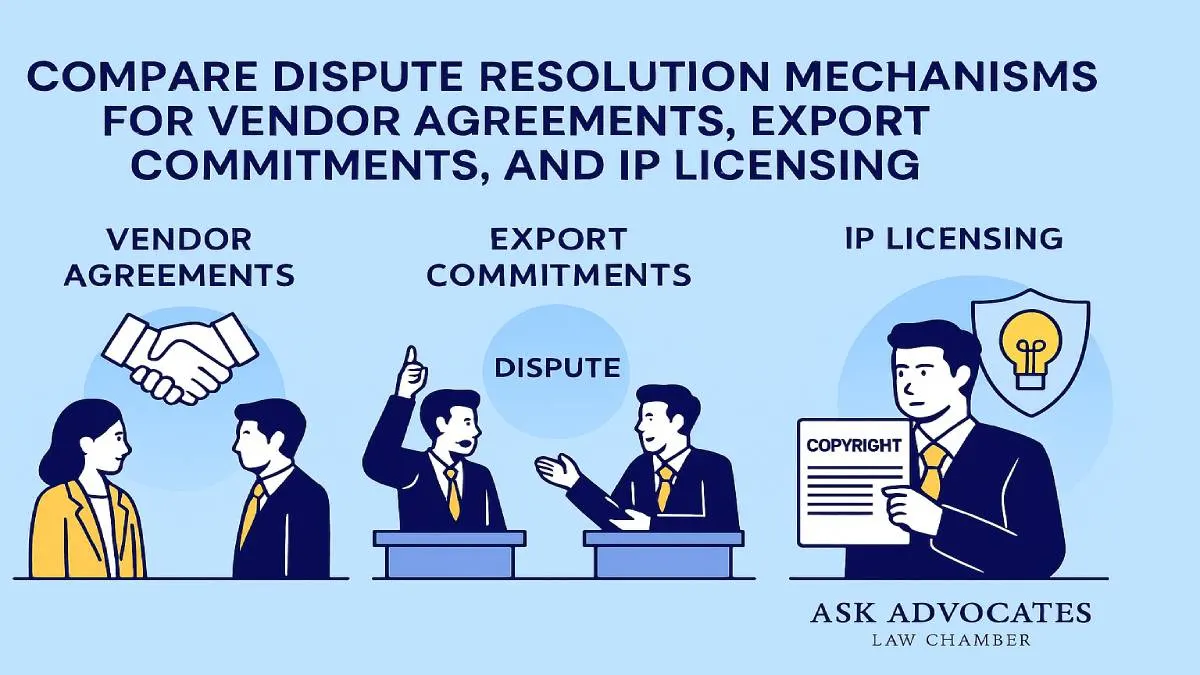
- Compare dispute resolution mechanisms for vendor agreements, export commitments, and IP licensing
- Contractual Disputes in STPI Units: Arbitration vs. Litigation for Tech Partnerships
- Challenging or Defending GST Advance Ruling Orders: Legal Strategies and Remedies
- How the Special Valuation Branch (SVB) Impacts Transfer Pricing and Import Valuation – Legal Helpline
- Ministry of Electronics & Information Technology (MeitY)