Your Trusted Civil Law Advocates - Civil law disputes affect property rights, contractual obligations, financial interests, and personal claims. Therefore, experienced legal guidance becomes essential for achieving fair resolutions. Ask Advocates Law Chamber provides strategic civil litigation support for individuals, companies, NGOs, and NRIs across India. The firm assists clients before District Courts, Civil Courts, Commercial Courts, Consumer Commissions, High Courts, and the Supreme Court. Lawyers analyze facts, evidence, and applicable laws before preparing legal strategies. Moreover, CPC, BSA, BNS, and BNSS provisions influence various civil and related proceedings. Proper documentation strengthens every claim and defence.
Your Trusted Civil Law Advocates: Seeking Fair Resolutions for All Cases - Ask Advocates Law Chamber
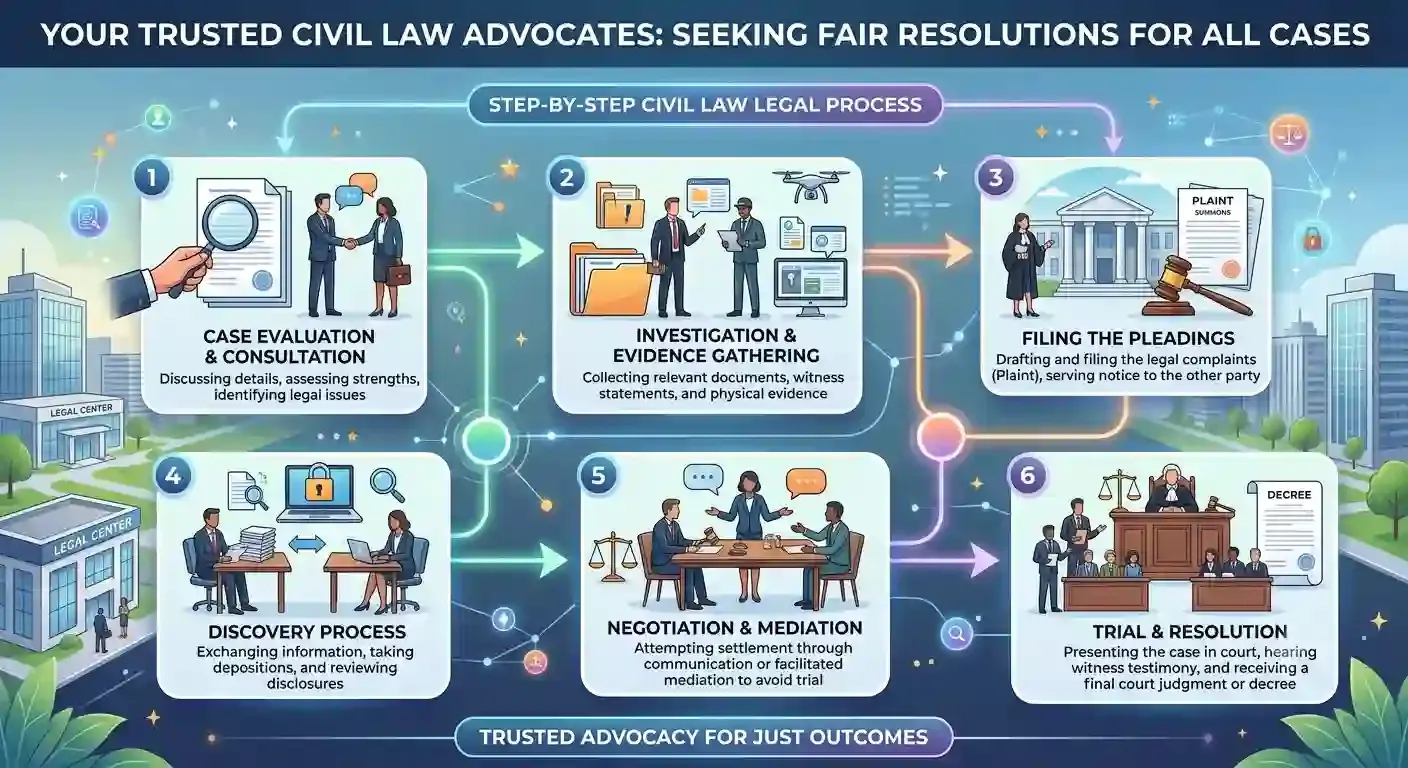
Major civil legal services include:
- Property disputes
- Contract disputes
- Recovery suits
- Injunction matters
- Partition cases
- Declaration suits
- Specific performance claims
- Consumer disputes
Effective representation protects rights and promotes timely dispute resolution.
Understanding Civil Litigation Framework in India
Civil litigation resolves disputes involving private rights, financial claims, property interests, and contractual obligations. Accordingly, courts follow structured procedures under the Code of Civil Procedure, 1908. Plaint filing, written statements, evidence presentation, arguments, and judgments form important litigation stages. Lawyers ensure compliance with limitation periods and procedural requirements. Revenue Departments, Registration Departments, Municipal Authorities, and other government offices may provide essential records. BSA governs evidence assessment during judicial proceedings. Furthermore, courts consider documentary records, witness statements, and electronic evidence. Common civil forums include:
| Forum | Handles |
|---|---|
| Civil Courts | General disputes |
| Commercial Courts | Business disputes |
| Consumer Commissions | Consumer claims |
| High Courts | Appeals and supervision |
| Supreme Court | Constitutional and final appeals |
Strategic legal planning improves outcomes across different civil proceedings.
Types of Civil Cases Handled by Advocates
Civil advocates represent clients across diverse legal disputes involving rights and obligations. Therefore, selecting the correct legal remedy becomes important before approaching courts. Property disputes frequently involve ownership, possession, title verification, and boundary issues. Contract disputes require careful examination of agreements and performance obligations. Recovery suits address unpaid financial claims between parties. Major civil matters include:
- Property ownership disputes.
- Partition and inheritance disputes.
- Breach of contract claims.
- Injunction applications.
- Specific performance suits.
- Money recovery proceedings.
- Commercial disagreements.
Additionally, lawyers assist clients with negotiation, mediation, arbitration, and court representation. Proper case evaluation helps determine suitable remedies and litigation strategies.
Property Disputes and Ownership Rights
Property disputes represent one of the most common civil litigation areas in India. Therefore, advocates carefully examine title documents, sale deeds, agreements, and government records. Registration Department records help verify ownership history. Revenue Department documents support land possession and mutation claims. Courts examine evidence before granting ownership declarations or injunction orders. Property disputes commonly involve:
- Illegal possession.
- Boundary disagreements.
- Title defects.
- Partition claims.
- Inheritance conflicts.
- Sale agreement disputes.
Lawyers conduct due diligence before filing proceedings. Moreover, they seek appropriate remedies through civil suits, injunction petitions, declarations, and settlement discussions. Effective representation helps protect valuable immovable and movable property rights.
Contract Disputes and Commercial Litigation Support
Contracts create legally enforceable obligations between parties. Consequently, breach of contractual terms may result in financial losses and litigation. Civil advocates review agreements, payment records, correspondence, and performance obligations. Commercial Courts handle eligible business disputes under applicable laws. Arbitration clauses may provide alternative dispute resolution options. Contract dispute remedies include:
- Damages claims.
- Specific performance.
- Contract termination.
- Injunction relief.
- Settlement negotiations.
Businesses, startups, NGOs, and individuals require accurate legal advice before initiating claims. Additionally, lawyers prepare notices, pleadings, evidence submissions, and court arguments. Strong contractual enforcement protects commercial relationships and financial interests.
Civil Recovery Suits and Financial Claim Resolution
Recovery proceedings help individuals and businesses recover legally enforceable monetary claims. Therefore, advocates evaluate invoices, agreements, acknowledgments, payment records, and communications before filing suits. Financial disputes may arise from unpaid loans, business transactions, service agreements, or commercial dealings. Civil Courts and Commercial Courts provide remedies according to applicable jurisdiction. Lawyers prepare pleadings according to CPC requirements and present supporting evidence. Moreover, BSA principles guide the acceptance and evaluation of documentary and electronic records. Recovery remedies include:
- Money recovery suits.
- Summary suits under CPC.
- Negotiated settlements.
- Arbitration proceedings.
- Execution of decrees.
Creditors should act within limitation periods to protect recovery rights. Professional representation improves procedural compliance and increases successful recovery prospects.
Injunctions, Declarations, and Preventive Legal Remedies
Preventive remedies protect parties from potential harm before disputes escalate. Accordingly, courts grant injunctions when legal requirements are satisfied. Temporary and permanent injunctions prevent unlawful actions affecting property, contracts, or personal rights. Declaration suits establish legal status, ownership, or entitlement. Lawyers assess urgency before selecting suitable remedies. Courts examine evidence, balance of convenience, and possible injury. Common preventive remedies include:
| Remedy | Purpose |
|---|---|
| Temporary Injunction | Immediate protection |
| Permanent Injunction | Long-term restraint |
| Declaration Suit | Establish legal rights |
| Status Quo Order | Maintain existing position |
| Specific Performance | Enforce contractual duties |
Proper legal strategy prevents irreversible losses and protects clients during ongoing disputes.
Role of Evidence in Civil Litigation Success
Evidence determines the strength of civil claims and defences. Therefore, parties should preserve relevant documents before approaching courts. BSA regulates evidence principles after replacing earlier evidentiary legislation. Lawyers collect agreements, government records, photographs, digital communications, expert reports, and witness statements. Courts evaluate reliability, relevance, and authenticity before reaching decisions. Important evidence sources include:
- Sale deeds.
- Agreements.
- Bank records.
- Emails.
- Digital files.
- Government certificates.
- Witness testimony.
Furthermore, electronic evidence requires proper preservation and presentation. Advocates ensure documents comply with court requirements. Well-prepared evidence improves credibility and strengthens litigation outcomes before Civil Courts, Commercial Courts, and appellate forums.
Alternative Dispute Resolution for Civil Matters
Civil disputes do not always require lengthy courtroom proceedings. Therefore, mediation, arbitration, and negotiation provide practical settlement options. Courts encourage alternative dispute resolution whenever suitable. Mediation centres attached to courts help parties resolve disagreements peacefully. Arbitration offers confidential dispute resolution through agreed procedures. Lawyers advise clients regarding settlement advantages and possible risks. ADR benefits include:
- Faster resolution.
- Lower expenses.
- Confidential proceedings.
- Flexible outcomes.
- Preserved relationships.
Additionally, Lok Adalats resolve suitable disputes through compromise mechanisms. Successful settlements reduce court burden and provide practical solutions. Professional legal advice ensures settlements protect clients' lawful interests.
Civil Appeals and Higher Court Remedies
Parties dissatisfied with civil judgments may pursue appellate remedies under applicable laws. Consequently, lawyers review judgments, grounds of appeal, limitation periods, and procedural issues. District Courts, High Courts, and the Supreme Court hear appeals according to jurisdiction. CPC provides important procedural rules for appeals and related applications. High Courts supervise subordinate courts through constitutional and statutory powers. Available remedies include:
- First appeals.
- Second appeals.
- Review petitions.
- Revision petitions.
- Special Leave Petitions.
Advocates prepare detailed grounds supported by evidence and legal precedents. Timely action improves opportunities for obtaining appropriate relief. Effective appellate representation protects clients from incorrect judicial outcomes.
Protecting Civil Rights Through Strategic Legal Representation
Civil disputes require accurate legal analysis, strong evidence, and timely action. Therefore, professional representation helps clients navigate complex judicial procedures effectively. Ask Advocates Law Chamber supports individuals, companies, NGOs, and NRIs with comprehensive civil litigation services. The firm handles property disputes, commercial conflicts, recovery matters, injunction proceedings, inheritance issues, and contractual claims. Lawyers represent clients before Civil Courts, Commercial Courts, Consumer Commissions, Tribunals, High Courts, and the Supreme Court. Moreover, the team assists with mediation, arbitration, documentation, legal notices, and settlement negotiations. Effective legal support includes:
- Case evaluation.
- Document verification.
- Litigation strategy.
- Court representation.
- Settlement guidance.
- Appeal assistance.
Early legal consultation helps clients protect rights and achieve fair resolutions through lawful remedies.
Why Choose Ask Advocates Law Chamber for Civil Cases
Ask Advocates Law Chamber provides reliable civil law solutions based on detailed legal research and practical strategies. The firm advises clients regarding property disputes, business conflicts, contractual matters, financial claims, and civil remedies. Lawyers prepare petitions, written statements, legal notices, evidence submissions, and appellate documents. Furthermore, the team assists clients before District Courts, Commercial Courts, Consumer Forums, High Courts, and the Supreme Court. The advocates understand CPC procedures, evidence requirements under BSA, and related provisions under BNS and BNSS wherever applicable. Every case receives personalized attention according to facts, jurisdiction, and legal objectives. Professional representation helps reduce procedural challenges and improves confidence during litigation. Strategic legal support ensures clients pursue remedies effectively while protecting their lawful interests.
Frequently Asked Questions
1. What types of cases are handled by civil advocates?
Civil advocates handle property disputes, contract disputes, recovery suits, injunction matters, inheritance claims, declaration suits, commercial disputes, and other private legal rights issues.
2. Which court handles civil disputes in India?
Civil Courts generally handle disputes. Commercial Courts, Consumer Commissions, High Courts, and the Supreme Court hear matters according to subject matter and jurisdiction.
3. What documents are needed for property disputes?
Important documents include sale deeds, title documents, revenue records, registration documents, tax receipts, agreements, possession records, and supporting evidence.
4. Can civil disputes be settled without going to court?
Yes. Parties may resolve suitable disputes through mediation, arbitration, negotiation, or Lok Adalat settlements with proper legal guidance.
5. How can I recover money through civil proceedings?
A claimant may file recovery suits, summary suits, arbitration proceedings, or settlement claims based on legally enforceable financial obligations.
6. Why should I hire a civil law advocate?
A civil advocate provides legal analysis, document preparation, court representation, evidence management, and strategic guidance to protect rights throughout litigation.
Read More
- Resolve Disputes Efficiently: Expert Civil Law Services for Individuals and Businesses
- Proven Track Record in Criminal Defense: Get the Representation You Deserve
- Trusted Criminal Defense Lawyers: Protecting Your Freedom and Future
- Your Rights Protected: Aggressive Legal Defense in Criminal Cases
- Assertive Defense Strategies: Premier Criminal Law Firm at Your Service
- Department of Legal Affairs – Ministry of Law and Justice