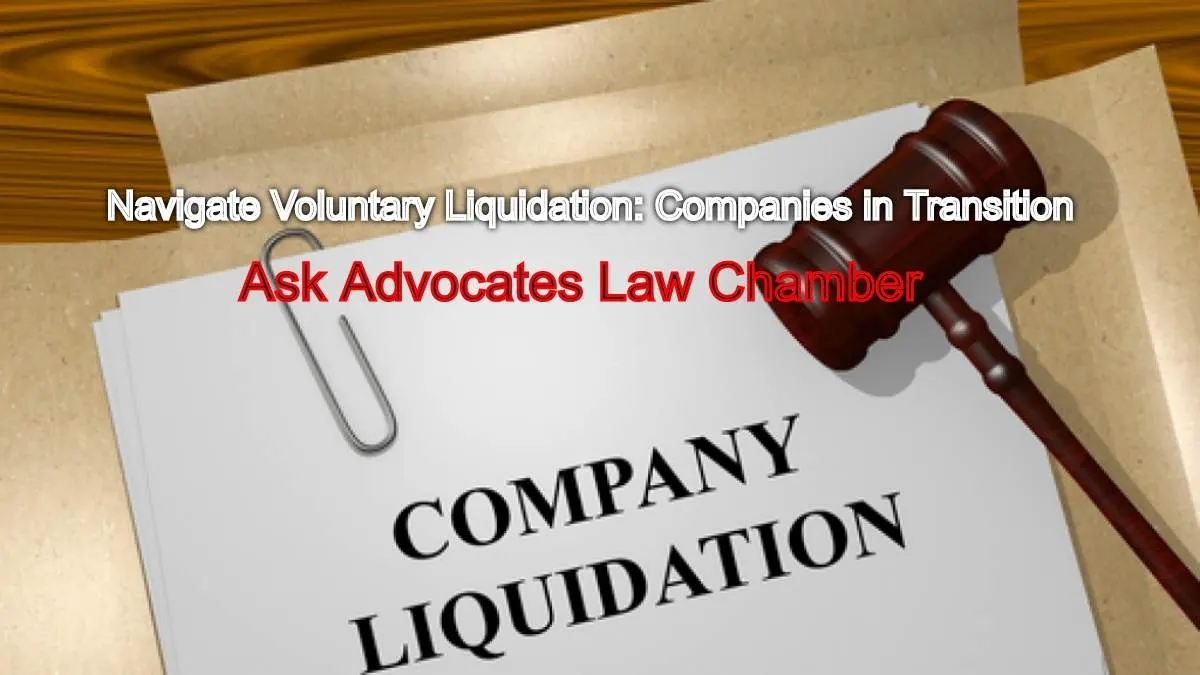
Navigate Voluntary Liquidation: The decision to close a business, even a voluntary one, can be daunting. However, with the right guidance and support, navigating voluntary liquidation can be a smooth and successful process. Ask Advocates Law Chamber stands ready to be your trusted advocate throughout this transition.
Navigate Voluntary Liquidation: Ask Advocates Law Chamber, Your Trusted Guide Through Business Transition
What is Voluntary Liquidation?
Voluntary liquidation, also known as winding up, is a formal process by which a solvent company dissolves its assets, settles its debts, and distributes any remaining funds to its shareholders. This is typically undertaken when a company owners decide to cease operations or restructure their business model. Voluntary liquidation offers a controlled and orderly way to close a business while minimizing legal and financial risks.
Why Choose Ask Advocates Law Chamber?
Ask Advocates Law Chamber, with its team of experienced and qualified lawyers, understands the complexities involved in voluntary liquidation. We are not just another law firm; we are your partner in this critical phase of your business journey. Here's why AskAdvocates is the ideal choice for your voluntary liquidation needs:
- Extensive Experience: Our lawyers have a proven track record of successfully guiding companies through voluntary liquidation processes. This experience ensures a smooth and efficient closure, minimizing disruption to your business operations.
- In-depth Knowledge: Our team possesses a deep understanding of the legal and regulatory framework surrounding voluntary liquidation. We will navigate you through the intricate legalities, ensuring compliance with all relevant laws.
- Client-Centric Approach: We understand that every business is unique. Our lawyers will take the time to understand your specific needs and tailor our services accordingly. We are committed to providing personalized and responsive legal guidance throughout the process.
- Global Reach: While Ask Advocates is headquartered in Chennai, India, we possess the expertise and resources to handle voluntary liquidation for companies operating internationally. Our lawyers stay current with global legal developments to ensure a seamless process regardless of your location.
The Voluntary Liquidation Process with Ask Advocates
Ask Advocates will guide you through every step of the voluntary liquidation process:
- Initial Consultation: During this initial consultation, our lawyers will discuss your business situation, objectives for liquidation, and answer any questions you may have.
- Planning and Strategy: We will work closely with you to develop a comprehensive liquidation plan, outlining the timeline, key procedures, and potential challenges.
- Stakeholder Communication: Our team will handle all communication with creditors, shareholders, employees, and other stakeholders, ensuring transparency and adherence to legal requirements.
- Asset Sale and Debt Repayment: AskAdvocates will oversee the sale of your company's assets in a fair and transparent manner. We will also manage the repayment of debts and distribution of any remaining funds to shareholders.
- Company Dissolution: Once all assets are sold, debts are settled, and final distributions are made, we will assist with the formal dissolution of your company, ensuring legal closure.
FAQs: Voluntary Liquidation with Ask Advocates
The time frame for voluntary liquidation varies depending on the complexity of your business structure, the number of creditors, and the value of assets to be sold. However, Ask Advocates will work diligently to expedite the process as much as possible, keeping you informed every step of the way.
Tax implications can vary depending on your location and specific business situation. Ask Advocates will work closely with your tax advisor to ensure compliance with all tax regulations.
Ask Advocates will ensure all legal requirements regarding employee termination are met. We will work with you to develop a fair and transparent severance package for your employees.
Yes, it is possible to reopen a business after voluntary liquidation. However, this will require establishing a new legal entity and may have tax and other legal implications. Our lawyers can advise you on the feasibility of reopening your business.
The cost of voluntary liquidation depends on the size and complexity of your business. Ask Advocates will provide you with a transparent fee schedule upfront, ensuring you are aware of all associated costs.
Conclusion: A Smooth Transition with Ask Advocates
Voluntary liquidation, while a significant decision, does not have to be a complex or stressful process. With Ask Advocates Law Chamber as your trusted advisor, you can navigate this transition with confidence. Our experienced lawyers will provide the legal expertise and support you need to ensure a smooth and successful closure of your business. Contact Ask Advocates today to discuss your voluntary liquidation needs.
Read More
- Achieve Corporate Compliance: Trusted Legal Advisors for Companies
- The Insolvency and Bankruptcy Code, 2016
- Navigate Complexities with Confidence: Expertise and Advocacy in Corporate Law
- Navigate Insolvency Challenges: Expert Legal Support for Corporate Resolution
- Liquidation and Winding Up
- National Company Law Tribunal (NCLT):